At the Capri, Protest Becomes Performance and History Finds Its Voice
9 min read
From a concept album brought to life on stage, to dramatic readings showcasing the work of six internationally acclaimed playwrights, to a gallery exhibition tracing the kinship between local and national freedom movements, three expressions of CAPRI 100’s recent programming brought art to life as an invitation to remember, reflect and act. And All About the Culture was there to capture each moment, while also catching up with a pair of creatives from Protest: A Revolutionary Rock Opus.
The Capri’s latest chapter began in fitting fashion with a homecoming concert by Andre Cymone, launching CAPRI 100, a yearlong celebration honoring a century of music, arts, culture and community at this venerable Northside landmark.
With a full calendar of programming still ahead, the centennial is both a tribute to the Capri’s rich history and a look toward its future. Three recent offerings reflect the breadth of the theater’s legacy, bringing together artists and audiences through performances and exhibitions that engage with history, provoke dialogue, and explore the power of creative expression. And as each was distinct in its approach and perspective, they further demonstrate how the Capri continues to make room for stories that challenge, resonate and stay with us long after the curtain falls.
A Record Reimagined
Song, drama, poetry, visual storytelling, and dance have the power to document the past, speak to the present, and call on us to shape the future. All of which came together at the Capri in late October.
At the center was Protest: A Revolutionary Rock Opus, a theatrical reinterpretation of the 2023 album of the same name, shining a light on women activists across the generations whose courage, struggle, and sacrifice have left, and in some cases continue to make, an indelible impact on the world. During its three-night stand (October 22–24), plus a Saturday matinee, the production melded music, choreography, and the spoken word to draw connections between the centuries-long legacy of resistance and the myriad causes that demand attention today.
Racial justice, climate change, gender equity, Indigenous sovereignty, LGBTQ+ liberation, economic equality, reproductive rights, gun control, immigrant rights, voting access, labor rights, suffrage, and pacifism all found their place on the Capri stage through the lives and transformative work of women such as Alice Paul, Angela Davis, LaDonna Brave Bull Allard, Dolores Huerta, Marsha P. Johnson, Diane Nash, Greta Thunberg, Kimberly Jones, Gloria Steinem, Eartha Kitt, Jane Fonda, X González, and more than a dozen others.
The result was not merely a tribute to those who challenged injustice, but a poignant reminder that social movements are built over time and that the achievements of one generation often lay the groundwork for the next.
The concept for Protest was born in the wake of George Floyd’s murder and the unrest and racial reckoning that followed. Not only here in Minneapolis. Not only across America. But all around the world.
It was the vision of writer, director, actor, and founder of Buffalo Gal Productions, Perrin Post, who, while the COVID-19 pandemic disrupted daily life, gathered a group of songwriters, musicians, and producers to set out to write and record an album of original material designed to turn conviction into action.
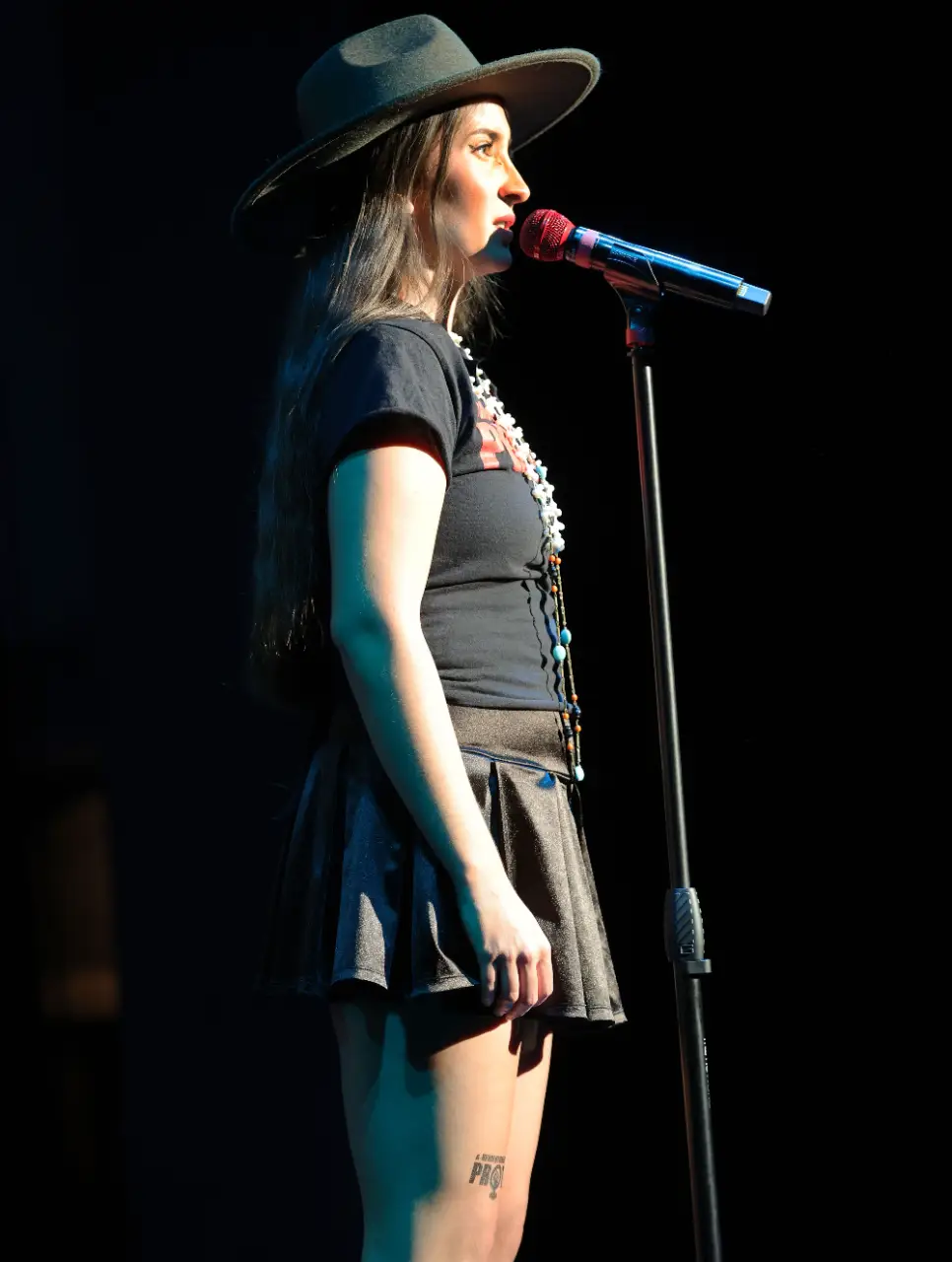
The 16-track record was released to critical acclaim on August 7, 2023, with Jill Schaffer of Cherry and Spoon, proclaiming that Protest “is not just a celebration but an education, elevating the voices of women we all should know.”
First showcased as part of the Chanhassen Summer Concert Series in 2024, the material was adapted into a full-length stage production with the assistance of a grant from the Minnesota State Arts Board.
With a 12-member cast, a four-piece band, and a complete creative team, Protest skillfully utilized the space at the Capri, now interpreting the songs through movement and giving them a more tangible, physical expression, allowing performers to embody their urgency, grief, defiance, resilience, and hope.
For choreographer, Gabrielle Dominique, a South Minneapolis native whose work also spans singing, dancing, theatre, and education, movement had to serve the music rather than just dress it up. And when asked about the process of adding choreography to a concept album like this, Dominique says, “I’m a firm believer that the movement needs to be fueled by the words.”
“When done right, when done intentionally,” she continues, “There’s clear information that’s being given to you by the music, and from there, it becomes a conversation.”
That’s a distinction worth recognizing according to Dominique, particularly when the themes and content are rooted in the lives of real people and consequential events. The choreography must effectively communicate the weight of the stories being told on stage without reducing them to simple clichés and dramatic conventions.
“There’s very heavy subject matter, real subject matter, historical subject matter,” she observes, “I don’t want to step up and wag a finger just for the sake of doing it. If it (the choreography) is inappropriate. If it makes a mockery of things. If it doesn’t honor the work, do it justice. Then no, that’s not the right approach.”
To Dominique’s mind, the challenge was to find movement that respected the people and histories represented while still allowing the production to function as a live performance. The choreography had to respond to the music, the lyrics and the emotional demands of each story. A process that begins with listening and collaboration.
“It has to come from honest conversation,” she says, “I don’t have the best idea in the room. I will never come in like that.”
Such an approach lends itself well to the collaborative nature of Protest and the social, political, and cultural movements it reflects. Activism rarely, if ever, belongs to one person alone, nor does a production that seeks to honor it. Thus, each artist contributes a unique perspective, and together, their performances explore how individual acts of courage helped fuel the pursuit of justice and equality and why those struggles still matter today.
Another one of those artists is singer/songwriter, actor, playwright, and director, Nora Montañez Patterson, who’s been part of Protest since its inception. Born in Lima, Peru and raised in Paterson, New Jersey, she was initially approached to contribute a track that paid tribute to more contemporary icons America Ferrera and Alexandria Ocasio-Cortez (both of whom were ultimately spotlighted on the album and stage production).
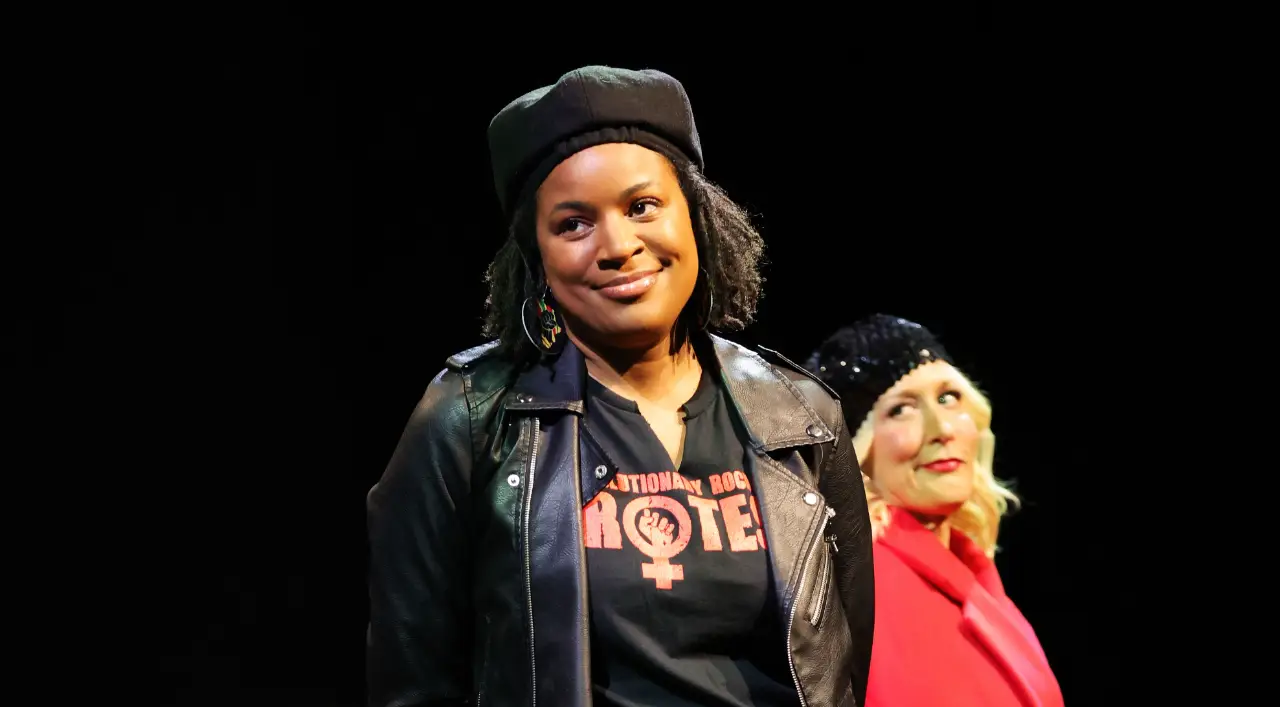
However, Montañez Patterson proposed a song chronicling the seven-decade legacy of Dolores Huerta, co-founder of the National Farm Workers Association whose influence helped transform the labor movement and inspire generations of activists.
The result was the original composition, “Dragon Lady,” which, for Montañez Patterson, connects labor rights and the immigrant experience to the broader struggle for dignity and self-determination. Moreover, how social movements depend on sustained commitment, often outside the public eye.
“If we don’t remember who they are, we’re going to forget how the past continues to tie into what’s happening now,” explains Montañez Patterson, “The connection between the past and present is central to what we are doing (with this stage production).”
She further emphasizes how the leaders represented are not to be safely confined to the history books, but whose stories offer context to today’s challenges and the people that confront them.
For Montañez Patterson, these women epitomize “the best of humanity.” And whose stories illustrate what people can do when they “work together and fight for something bigger than themselves.”
“This is not just a moment in time,” she adds, “It’s a continuous movement.”
And that is the distinction at the heart of Protest, which carefully honors individual contributions while underscoring the collective nature of social change. Of course, a song can keep someone’s name from fading away or a performance make history come to life. The real test, perhaps, is whether or not the message resonates beyond the theater.
A Broader Conversation on Freedom and Democracy
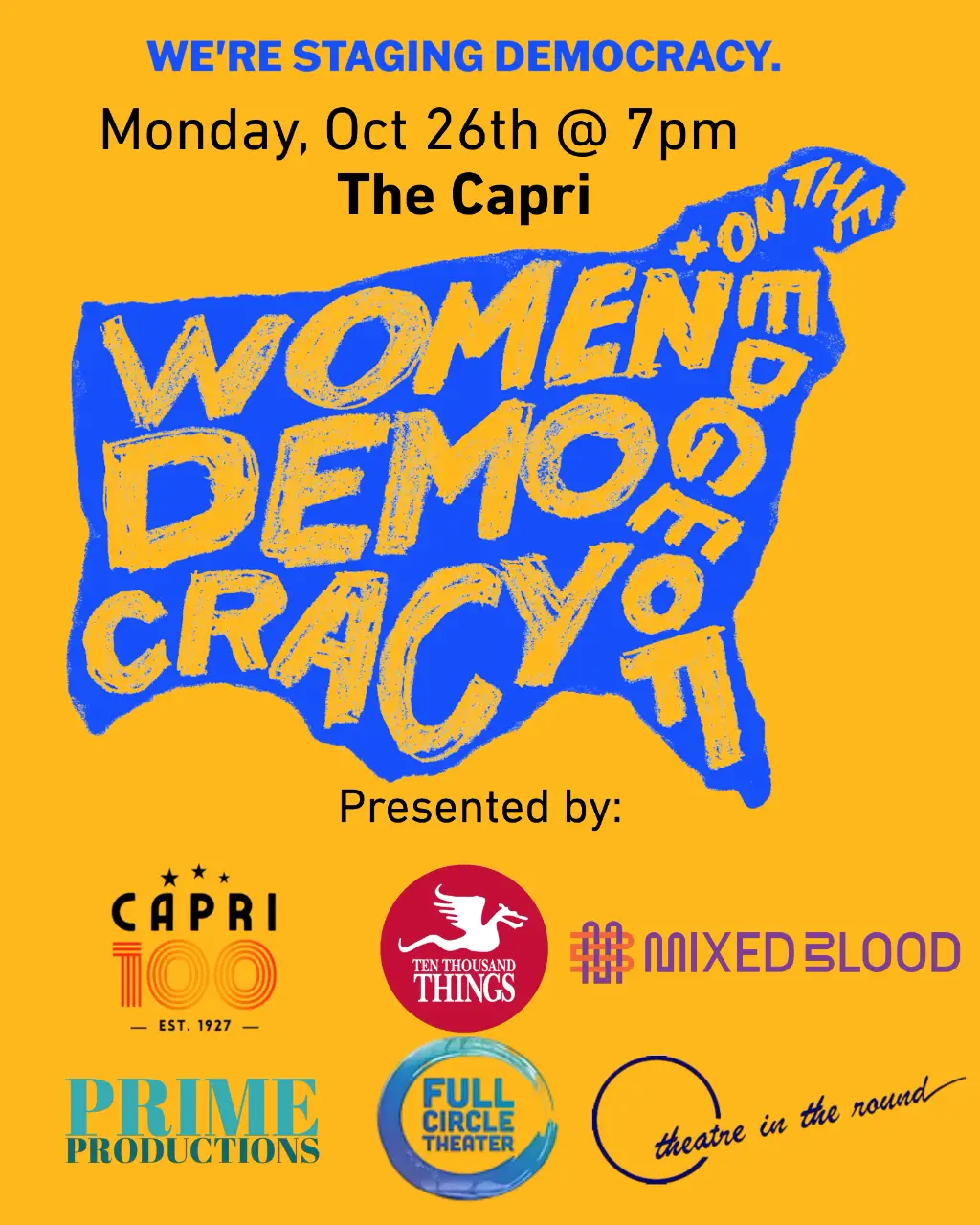
On October 26, the Capri showcased Women+ On the Edge of Democracy, a series of dramatic readings featuring original short plays by six world-class playwrights whose collective honors include the Pulitzer Prize, Tony and Emmy Awards, as well as both Oscar and Olivier nominations.
A collaboration between Twin Cities theatre companies, these stories examine the state of democracy through multiple lenses and a range of emotions. Moving between humor and heartbreak, rage and compassion, resentment and transformation, fear and faith, “these pieces map a picture of America today – revealing how democracy feels to those who have spent their lives giving voice to the unseen and unheard.”
Participating companies included Theatre in the Round, Teatro del Pueblo, Mixed Blood, Prime Productions, Ten Thousand Things, and Full Circle Theater. And rather than presenting democracy as a settled state of affairs, the project treats it as an ongoing question. A question that is shaped and reshaped by constant struggle, cultural shifts, and the people who seek and hold power.
In bringing diverse theatrical voices into the conversation, these six plays examine how these ideals are tested and renewed, while asking audiences to reflect on the responsibilities of citizenship and the challenge of preserving a representative democracy.
A Visual Record of Resistance
Late October at the Capri also marked the opening of James Curry’s multidisciplinary exhibition, soulforce: the movements of memory, on view in the Capri’s Carlson Family Foundation Gallery through December 2026.
With this presentation, Curry, a filmmaker, author, educator, and visual artist who grew up in Brooklyn Park, set out to connect histories that are often recorded separately. Through expansive collage panels (and smaller complementary displays) that feature historical photographs, newspaper and magazine clippings, and other archival images, soulforce “explores the parallel movements for freedom, self-determination, and equality among Black, Indigenous, and Chicano communities” both nationally and in the Twin Cities, with a particular focus on North Minneapolis as the “crossroads” where these local efforts coalesced.
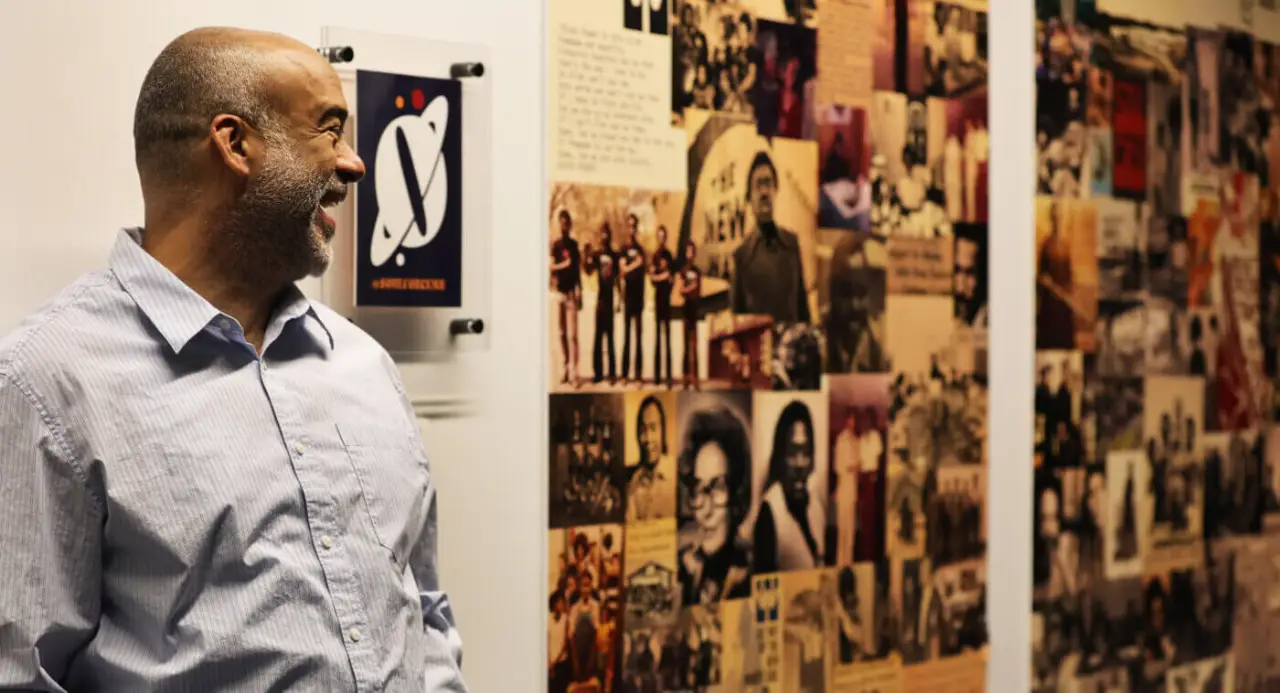
The panels provide a broad historical frame for the exhibition as a prologue traces the histories of Red, Black, and Brown communities in Minnesota during the 19th and early 20th centuries, while an epilogue contemplates where those struggles stand today. Nevertheless, the central focus of soulforce is the 1960s and 1970s when organizations such as the Black Panther Party, La Causa, Black Arts Movement started to reshape the fight for self-determination, political representation, and cultural recognition.
Curry also makes a clear nod to The Way, the Northside community center that nurtured young people’s self-expression, imagination and sense of belonging, while likewise providing creative space to the plucky and precocious teenage musicians that would craft the sound that established Minneapolis as a global music capital. And The Way’s presence in soulforce underscores how the social, cultural, and political movements of that era were often rooted in community-based institutions that helped shape a generation of young people whose influence would extend well beyond their own neighborhood.
soulforce: the movements of memory runs through the end of the year, with gallery hours on Tuesdays, from 6:00 pm to 9:00 pm.
The Work Behind the Curtain
The Capri is much more than a performance venue. It’s a place where Northsiders and others gather to experience art, discover big ideas, and witness the work of musicians, actors, dancers, playwrights, visual artists, filmmakers and storytellers whose creativity reflects the history, culture and evolving spirit of the community.
These recent offerings bring the Capri’s role into sharper focus, using music, theatre and visual art to: explore the connections between artistic expression, activism and social change; raise questions that remain relevant today; and preserve and elevate stories that might otherwise go unheard.
As the Capri begins its second century, its thoughtfully curated programming reflects what this historic North Minneapolis theater makes possible: a place where art connects the struggles of the past to the demands of the present and keeps alive the possibility of a more just future.