Plaza del Sol: Where Culture, Entrepreneurship and Community Come Together on St. Paul's East Side
Years in the making, the Latino Economic Development Center's latest investment on Payne Avenue brings food, business opportunity and a place for community to gather under one roof.
Across St. Paul's East Side, a renewed emphasis on neighborhood investment, small-business ownership and commercial corridor revitalization is helping shape the future of communities like Dayton's Bluff and Payne-Phalen. Along Payne Avenue and Arcade Street, that work is increasingly visible through new businesses, improved storefronts and initiatives designed to ensure that the people who live and work in these neighborhoods have a meaningful stake in their social, cultural, and economic futures.
And it is within that broader landscape that Plaza del Sol takes on particular significance.
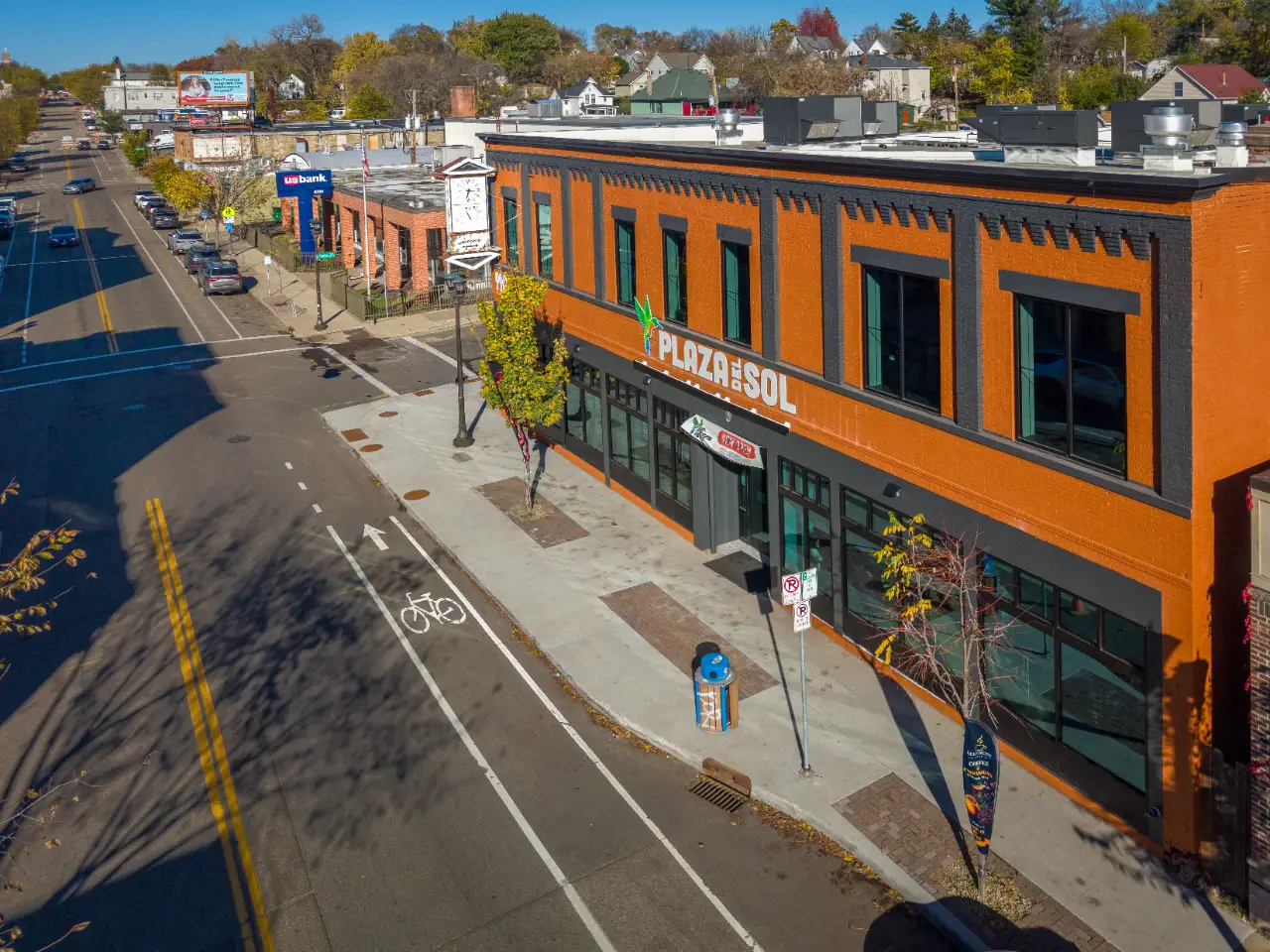
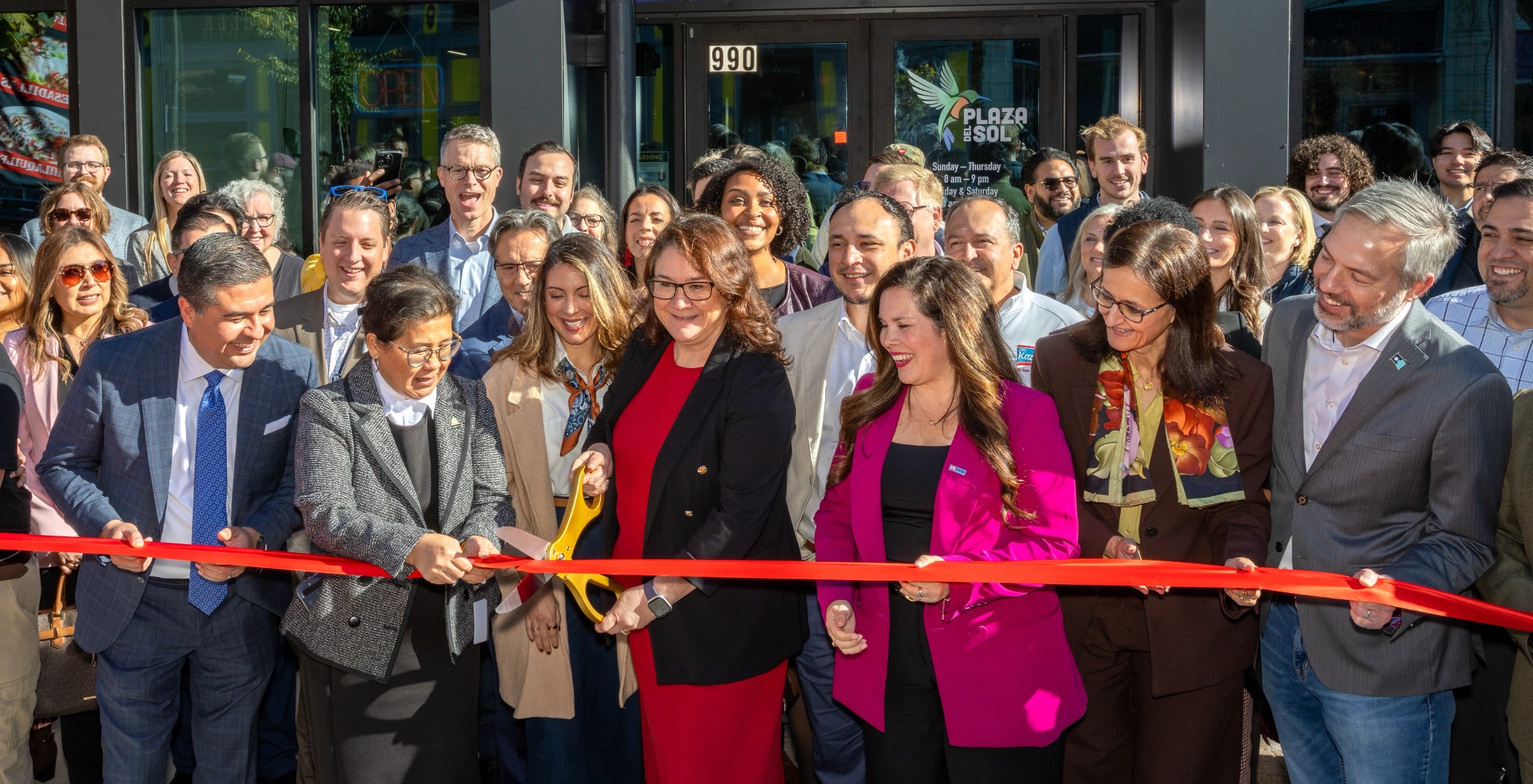
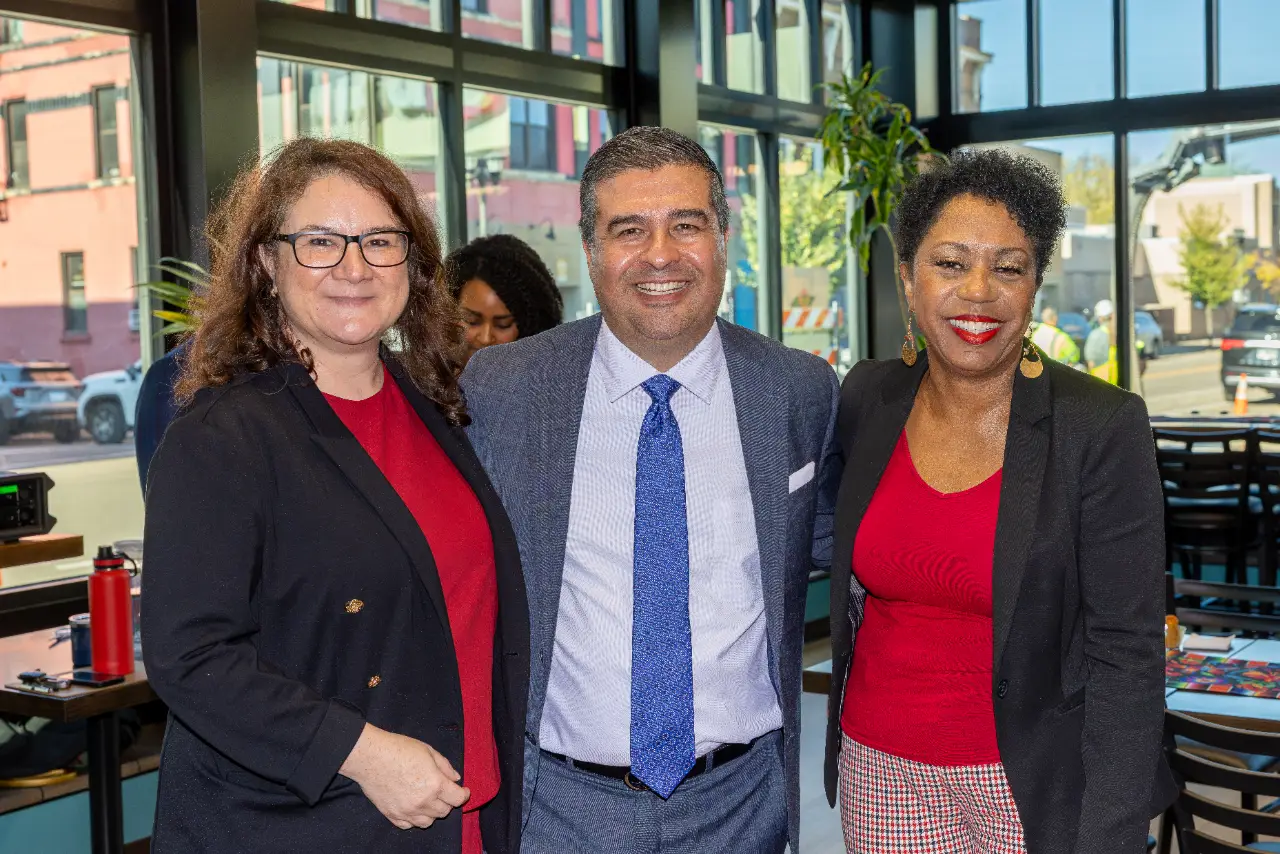
On October 29, the Latino Economic Development Center (LEDC) officially celebrated the grand opening of its newest community development project at 990 Payne Avenue, welcoming elected officials, community leaders, business owners, project partners and residents for a ribbon-cutting ceremony and afternoon of celebration. More than the unveiling of a renovated building, the occasion marked the culmination of years of planning, investment and perseverance, not to mention a fabulous new destination for food, culture, entrepreneurship and community connection.
Plaza del Sol brings together three complementary components: a food hall featuring independently owned businesses, a fully equipped commercial commissary kitchen, and a flexible event center designed to accommodate everything from family celebrations to professional gatherings. Together, they represent an investment in both the economic vitality and cultural fabric of the East Side.
For LEDC, the road to October 29 began well before construction.
The organization purchased the property in 2020, recognizing an opportunity to transform an underutilized building into something that could serve a much larger purpose. By 2022, the Plaza del Sol concept had taken shape, with a vision centered on creating accessible infrastructure for entrepreneurs while establishing a gathering place that reflects the cultures and communities of the surrounding neighborhood.
Bringing that vision to fruition required an extensive network of public, private and philanthropic partners. The project received $1 million in federal Community Project Funding along with significant state and local investment. But the investment was never simply about bricks, mortar and construction.
As LEDC Executive Director Alma Flores welcomed guests to the grand opening, she acknowledged the years of work, partnerships and shared belief that made the project possible. LEDC, a nonprofit community development financial institution (CDFI), is the only Latino-focused CDFI in Minnesota and the Upper Midwest. Its mission centers on creating economic opportunities and strengthening communities by supporting entrepreneurs who might otherwise encounter barriers to accessing capital, business development support, infrastructure, and other vital resources.
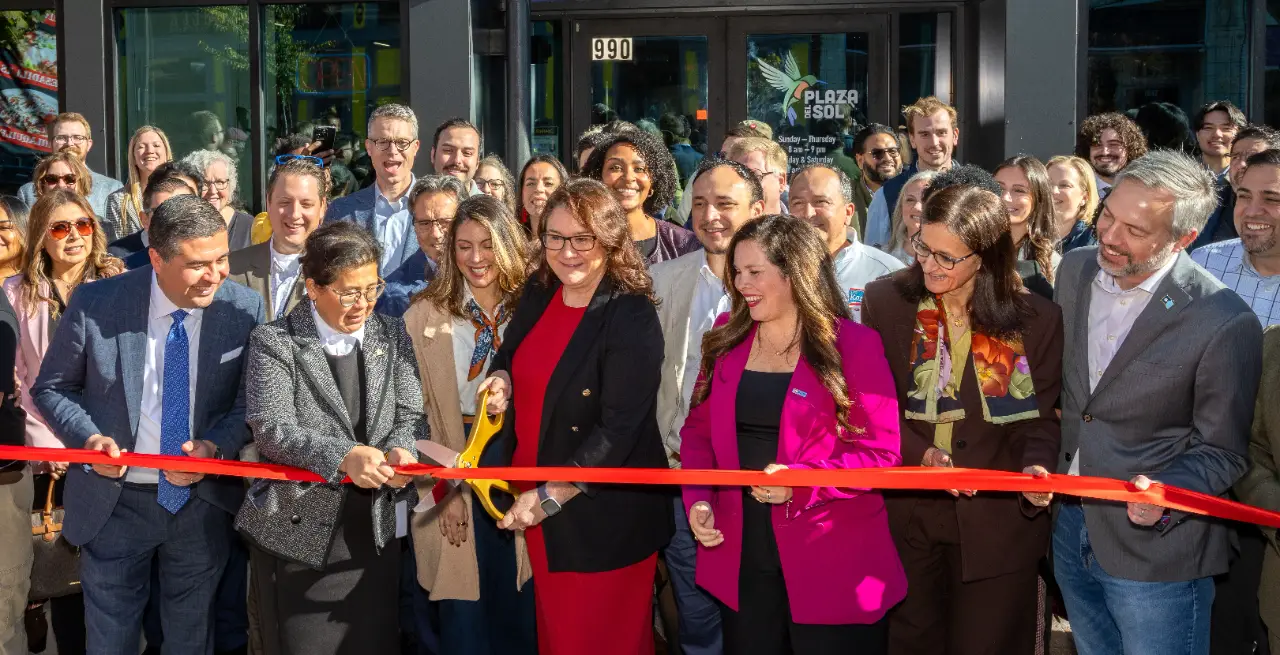
Flores also shared the organization's recent national recognition by the Opportunity Finance Network, which named LEDC its CDFI of the Year, a distinction that underscores the organization's growing influence in community-based economic development.
For Flores and the LEDC team, Plaza del Sol is a tangible expression of that work.
U.S. Representative Betty McCollum, who helped secure federal funding, reflected on the transformation of the property and the stories embedded in buildings like this one. She described the project as an opportunity to give a historic commercial property a new chapter, one that honors the generations of immigrants who have contributed to Minnesota while creating opportunities for those building businesses today.
The $1 million federal investment, she explained, was part of a broader effort to bring together federal, state, local, private and nonprofit resources to make meaningful community development possible.
“When we work together as a community, we can invest federal, state, local, and private dollars and nonprofit dollars. And when we do that, we can deliver,” McCollum said.
Having visited the property previously, when construction was still underway, McCollum returned to find a transformed space filled with color, vibrancy and, most importantly, people bringing the building to life. She also recognized the determination required to complete the project during Operation Metro Surge, the federal immigration enforcement operation that brought heightened ICE activity and widespread disruption to Minnesota, particularly immigrant communities.
At a time when many residents and businesses were navigating uncertainty and fear, the continued work on Plaza del Sol became another expression of collective strength and spirit. “Just think about the resilience and the courage it took each and every one of you to support one another, to make today happen,” McCollum said.
That sentiment resonated throughout the afternoon.
Minnesota State Senator Clare Oumou Verbeten, who represents the district (66) where Plaza del Sol sits, recalled visiting the property three years earlier as a freshman legislator and hearing the initial vision for this development. And alongside Representative Athena Hollins, she helped advance the state bonding legislation that provided $3.5 million for the project.
For Oumou Verbeten, the opening represented more than the completion of a development initiative. It was a moment of affirmation for a community that had endured considerable challenges.
“With everything that our community has been through over the last few years, and specifically the attacks on our Latino community, it was so good to be here today in a place of celebration,” she said.
She also connected the project to the broader economic future of Payne Avenue and the East Side, pointing to the potential for new businesses to attract customers, expand the tax base and generate resources for the public services residents depend on.
St. Paul Mayor Kaohly Her brought a more personal perspective to the celebration, drawing on her own family's experience as immigrants and small-business owners. Her father arrived in the United States with professional skills and experience but found that the employment opportunities available to him did not fully recognize or utilize his unique abilities. Opening a restaurant gave him a way to exercise greater control over his livelihood and pursue his dreams that he had for himself and his family.
That experience shaped how she views projects like Plaza del Sol.
“What you are all doing here is opening up the eyes of the next generation to see that they, too, can live the American dream,” Her said.
Having purchased her first home just blocks away and bringing her first child home to that same neighborhood, the mayor described Plaza del Sol as deeply personal.
“This investment that we made here in this neighborhood is an investment for generations to come,” she said.
Her enthusiasm was also rooted in something straightforward: the East Side deserves gathering places of this scale and character. The event center, in particular, offers a new option for celebrations and community functions in a neighborhood where those spaces have not always been readily available.
Matt Varilek, commissioner of DEED, emphasized another important dimension of the project: the role of community development financial institutions in helping entrepreneurs access capital.
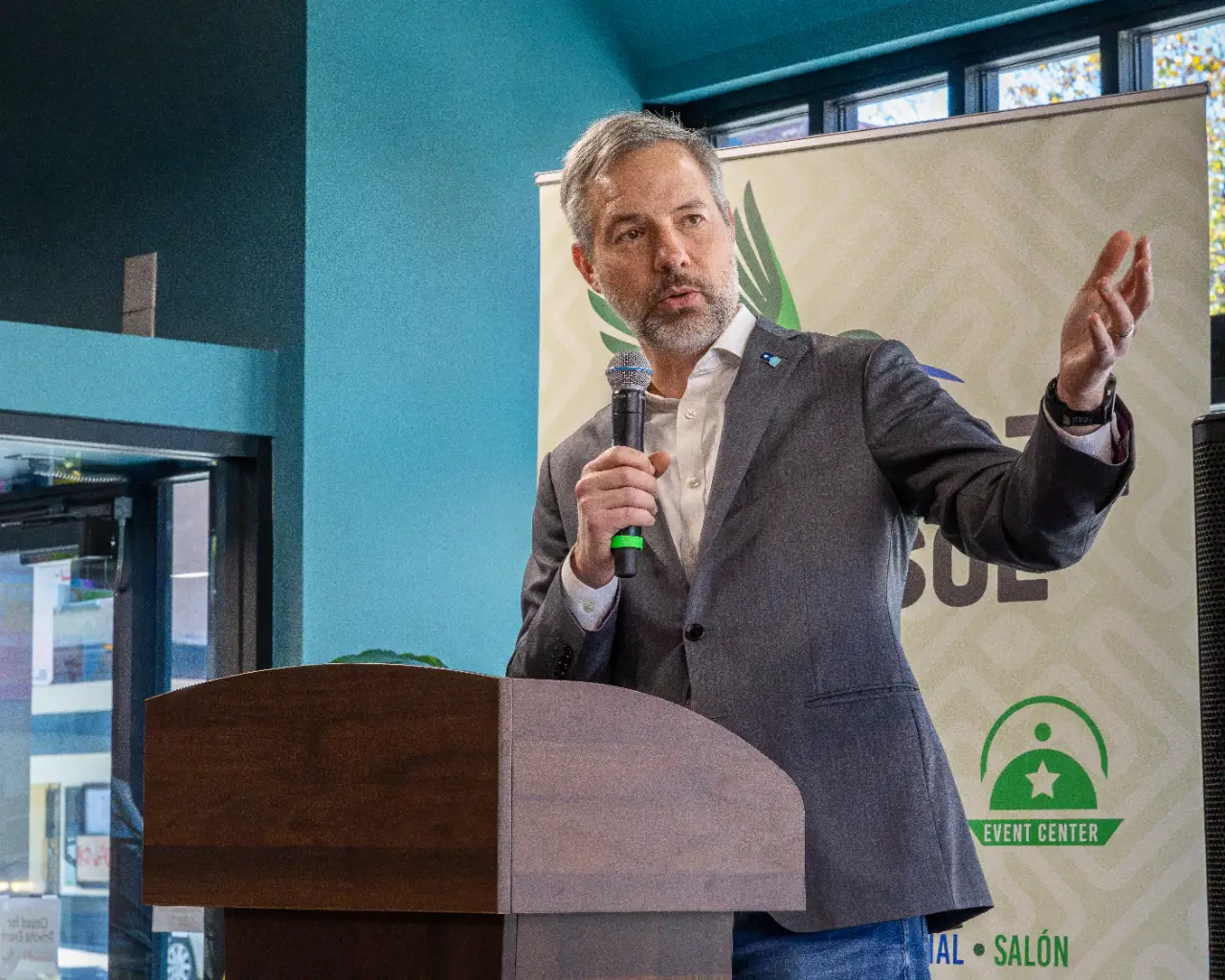
Having previously led the Initiative Foundation, another CDFI, Varilek spoke from experience about the importance of financial institutions that can reach business owners who may not qualify for or have access to traditional financing. He congratulated LEDC on its national recognition and highlighted DEED's significant investment in Plaza del Sol. But he also emphasized that the project's value extends beyond its financial contribution. The facility, he noted, will generate economic activity while providing something equally important: a place where community happens.
That intersection of capital and community was a theme Nancy Alvarado-Hazelton, Twin Cities Business Access Advisor at U.S. Bank, brought into particularly sharp focus.
As a member of LEDC's loan committee for several years, Alvarado-Hazelton has had a firsthand look at the stories behind the business plans. Those applications, she explained, are often much more than financial documents. They are family histories, personal aspirations and accounts of entrepreneurs trying to find a way forward.
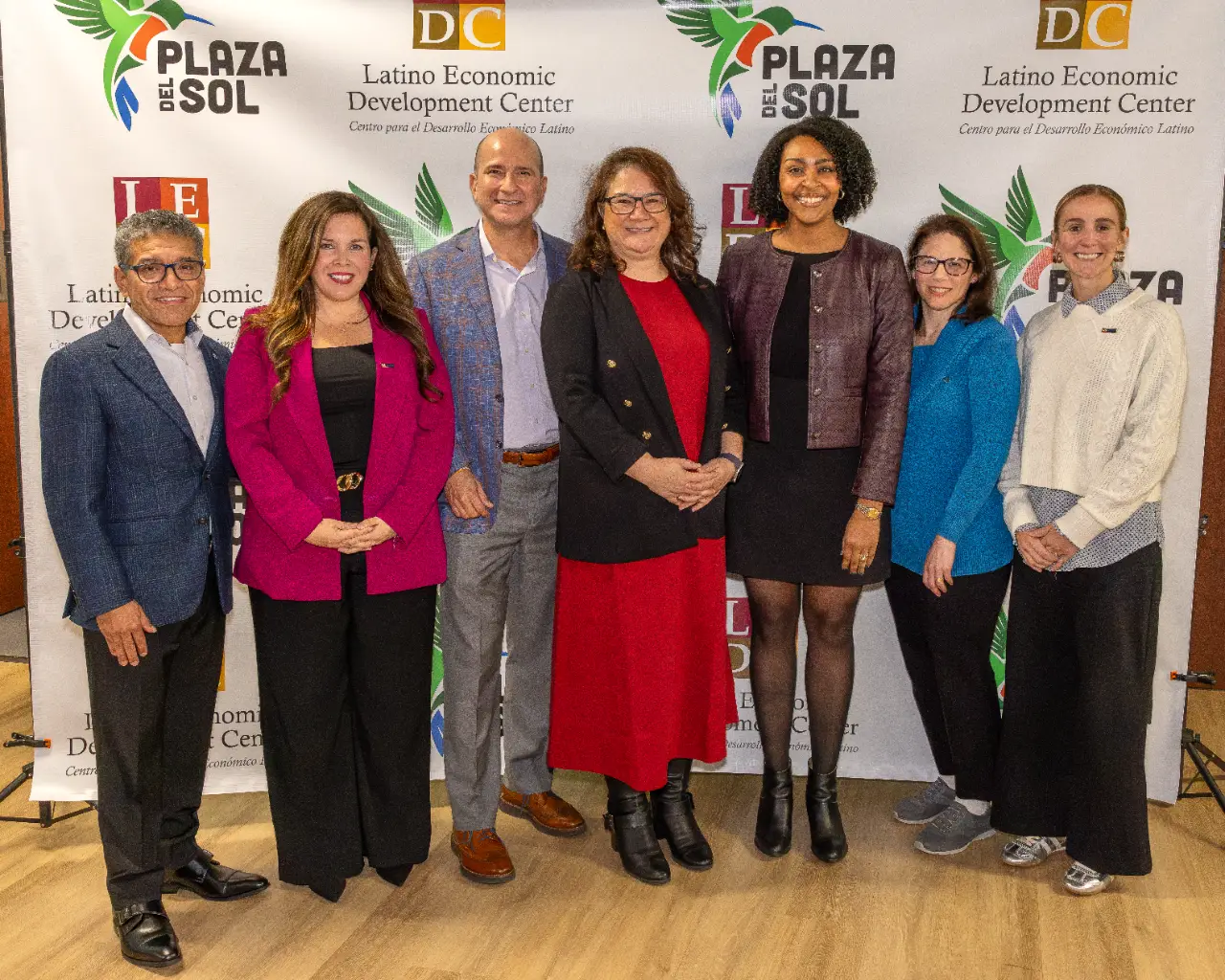
“We read business plans that are actually family stories,” she said.
She described the caterer who needs somewhere to prepare food before sunrise, the business owner whose operation has outgrown a rented kitchen, and the entrepreneur who has been told no elsewhere but arrives at LEDC and hears, “Let's figure this out together.”
That approach—meeting entrepreneurs where they are and helping them navigate the next step—is what makes Plaza del Sol such a natural extension of LEDC's work.
“Plaza del Sol is that same promise built in bricks,” Alvarado-Hazelton said.
Her remarks also underscored the importance of having financial partners who remain connected to the neighborhoods they serve. U.S. Bank's Payne Avenue branch is located next door to Plaza del Sol, and its support includes business banking services, one-on-one advising, philanthropy and collaboration with organizations like LEDC.
For Alvarado-Hazelton, the relationship between community and capital is essential to making those opportunities last. She also offered words of encouragement to the entrepreneurs beginning their next chapter inside Plaza del Sol, recognizing that building a business is rarely an easy undertaking.
U.S. Senator Amy Klobuchar, also shared a message recognizing the project's importance. She noted that she had worked alongside McCollum to secure funding because of the economic and community-building opportunities a destination like Plaza del Sol could provide.
Reflecting on Operation Metro Surge, Klobuchar acknowledged the difficult period Minnesota had experienced while also recognizing the courage and solidarity demonstrated by residents across the state. She encouraged people who had asked how they could support Minnesota to visit, meet its people and spend money at local businesses.
“Come to Plaza del Sol,” she said in her message. “Because as soon as you visit, you'll understand.”
A Place at the Table
And now, those promises are taking shape through the businesses that make up the food hall.
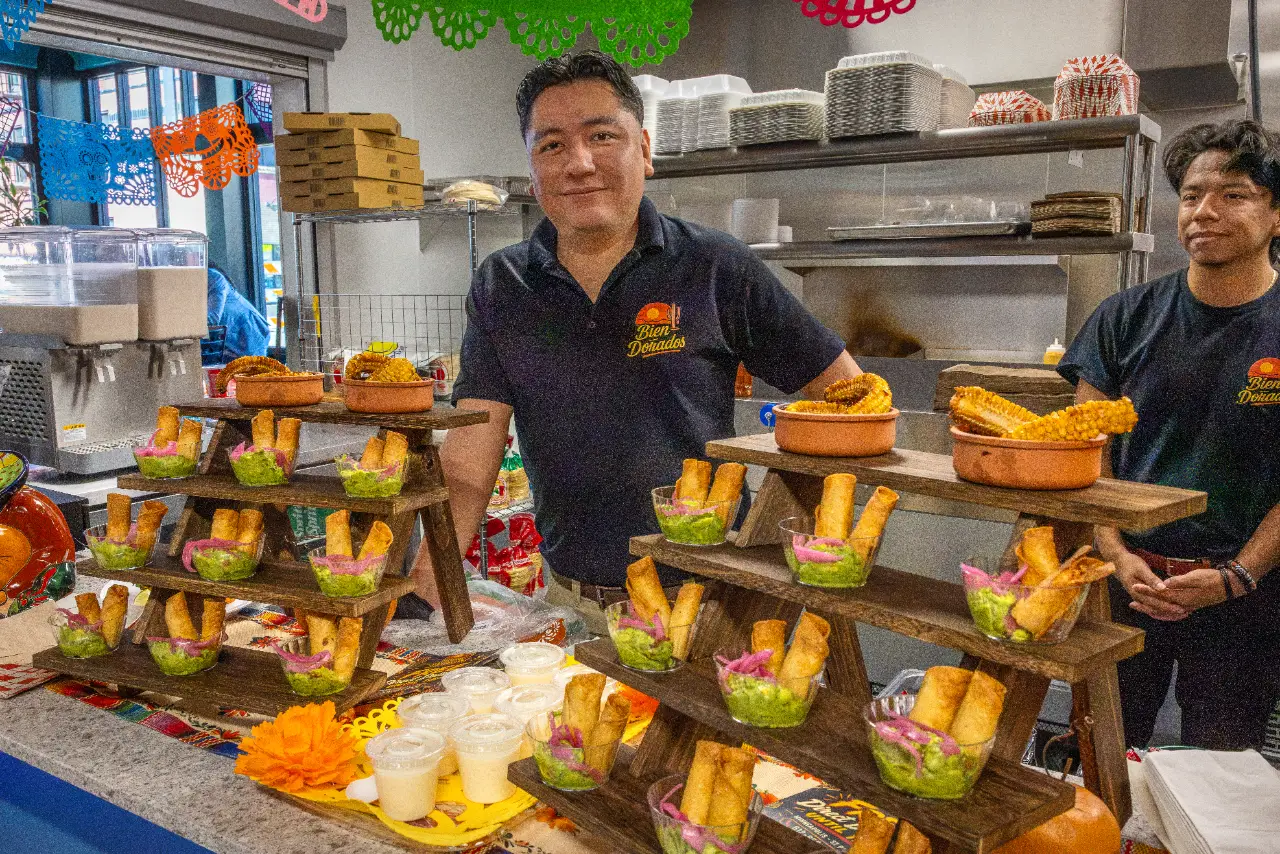
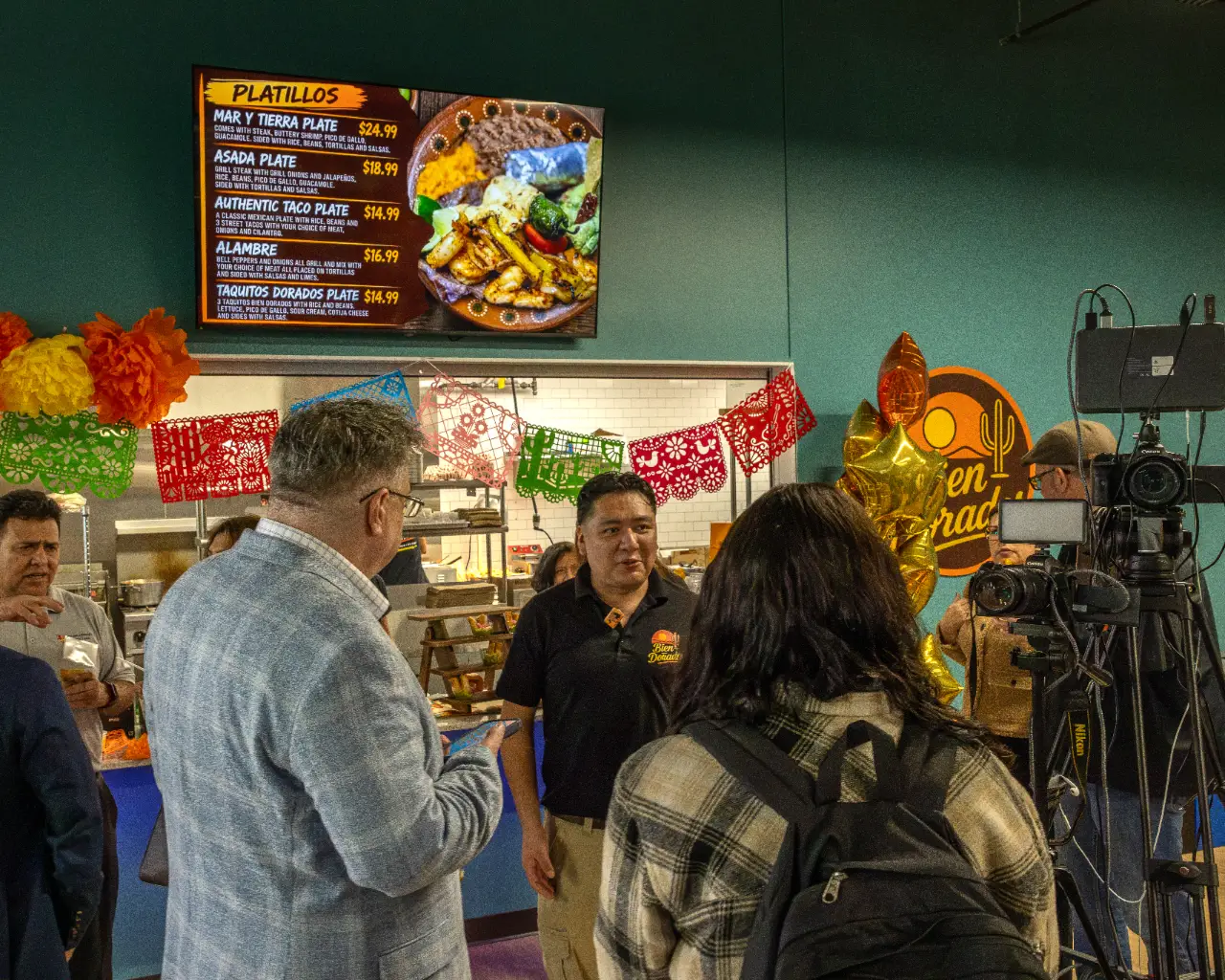
All About the Culture caught up with Heri and Erika Gonzalez, owners of Valentina's, a Mexican-Italian-American fusion concept, as well as Isaac Mendez and Medardo Gallareo of Bien Dorados, which serves traditional Mexican favorites alongside creative takes on street food and birria specialties.
When asked what this moment means to Valentina's and restaurateurs like she and her husband, Erika didn't hesitate: “A lot,” as she also spoke to being in a space that offers benefits beyond the business itself.
“Meeting a lot of new people. Learning new things. It actually helps us grow both personally and professionally. So, it means a lot to us, yeah,” she said.
For Bien Dorados, which previously operated as a ghost kitchen in Downtown West, Plaza del Sol represents an opportunity to take the next step. Isaac described it as “an opportunity to keep growing, to keep pushing forward. To showcase what we have [in a setting where people can see, experience and enjoy our food], what we didn't have in Minneapolis. It's really a dream come true.”
And showcase it they did. Medardo took us inside their kitchen for a firsthand look at how they prepare their popular quesabirria tacos.
Valentina's and Bien Dorados are just two of the businesses bringing their own flavor and personality to the food hall. Rounding out the lineup are Valentina's sister establishment, La Moreliana, a neveria and dessert bar; Deli Cheese Coffee, bringing Venezuelan soul to the mix; and Uno Dos Tres Bar, offering a lively spot to grab a drink, share a few laughs and enjoy good company.
The commissary kitchen extends those opportunities beyond the food hall itself. A fully licensed, state-of-the-art production space, it is designed to accommodate food makers, caterers, food truck operators and emerging chefs who need access to commercial kitchen facilities without having to shoulder the full cost of establishing their own. For entrepreneurs looking to test an idea, fulfill larger orders or scale an existing operation, that access can make a significant difference. Another way to describe the kitchen is the “place where dreams come true.”
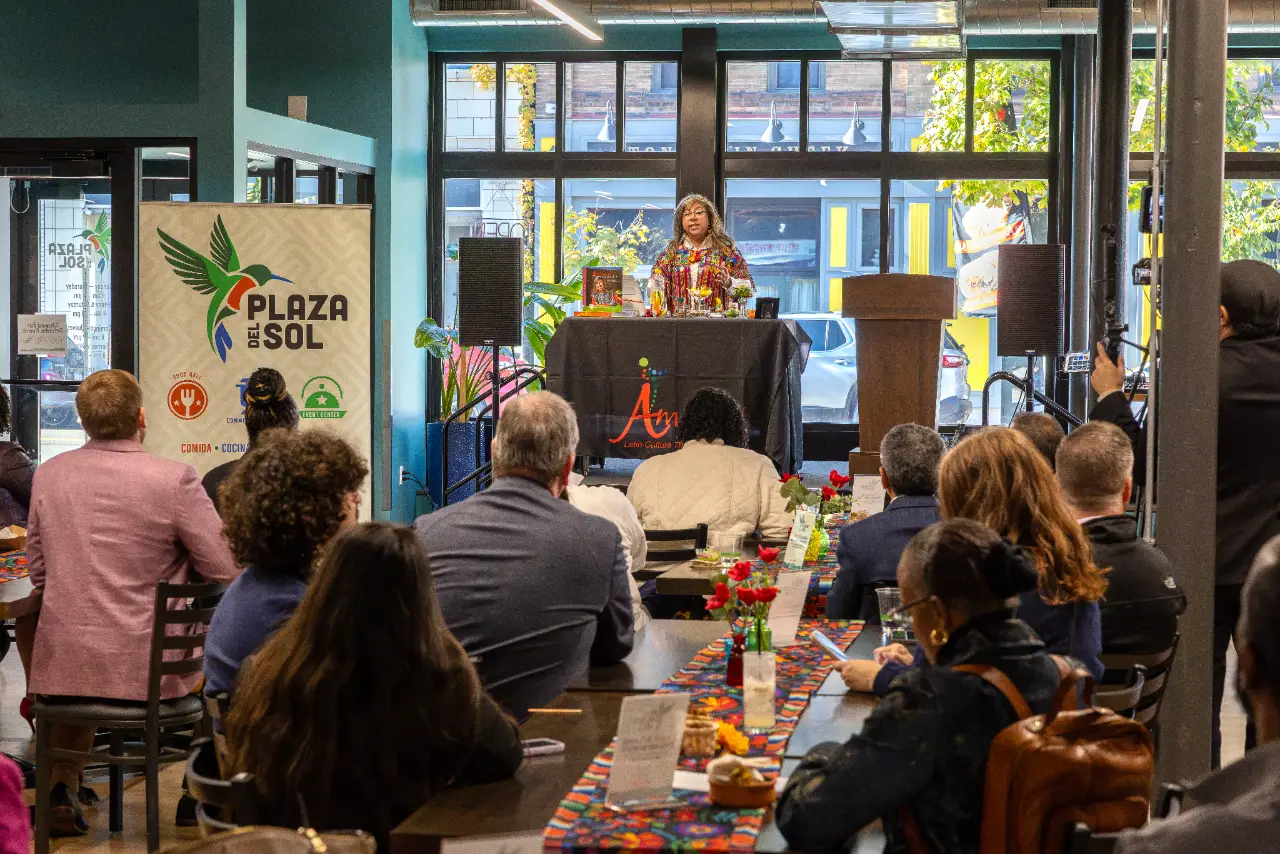
Award-winning chef, author, speaker and cultural storyteller Amalia Moreno-Damgaard brought that idea to life through a live culinary demonstration during the event.
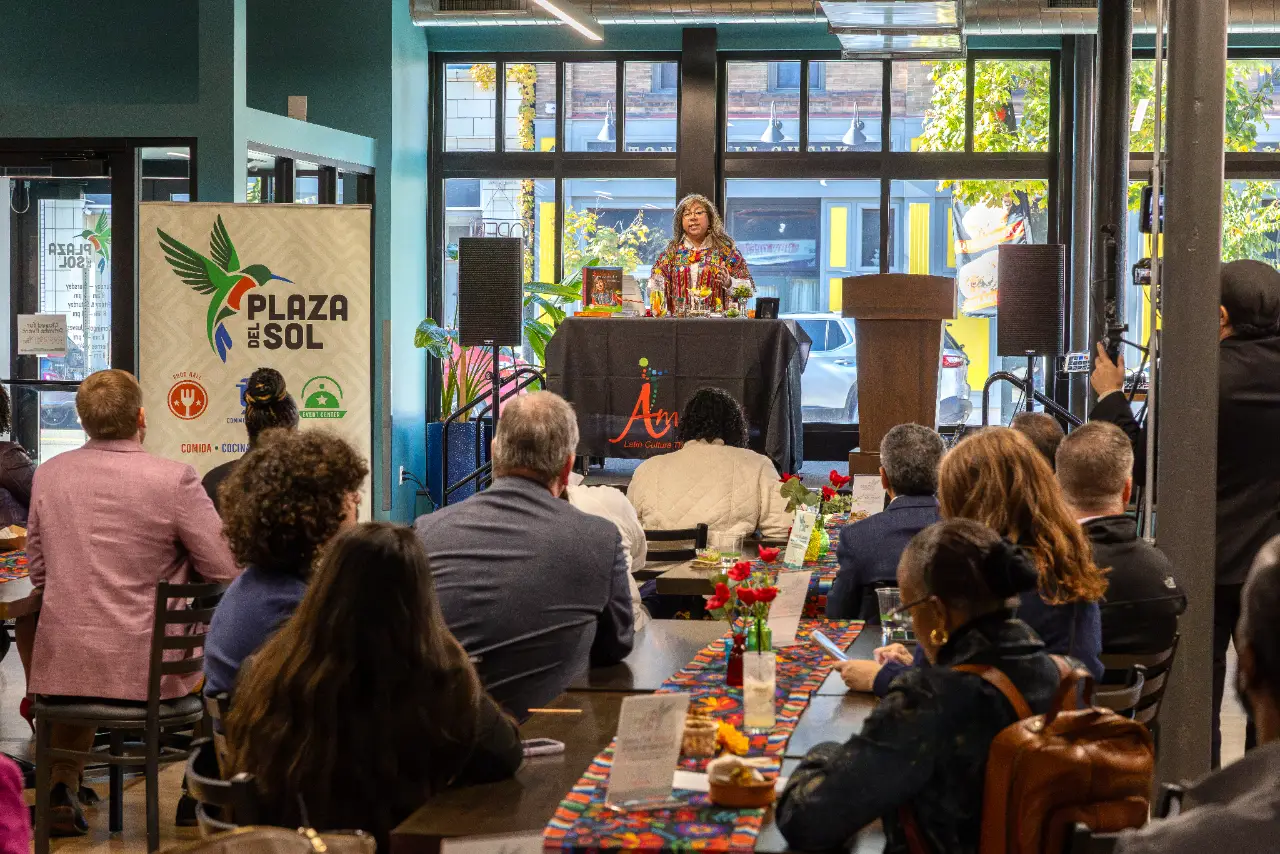
A former LEDC board member and an immigrant from Guatemala, Moreno-Damgaard spoke from the perspective of someone who understands both the challenges and rewards of entrepreneurship. Through her her Culture Through Cuisine ™ approach, she explores the ways food connects people to heritage, memory and identity.
“When you run a business on your own, you wear every hat,” she explained. “You create the product, find the customers, send the invoices, and figure out what comes next.”
For food entrepreneurs, having a suitable kitchen, access to resources and a network of people who can provide guidance can be just as important as having a good recipe. And that’s just one of the reasons why the commissary kitchen's potential resonates with Moreno-Damgaard.
“Behind every food business is a person with a story, a family, and a dream,” she said. “Here those dreams have room to grow.”
During her demonstration, Moreno-Damgaard also used food to illustrate how cultural traditions travel, evolve and remain recognizable across generations. Preparing fresh fruit with seasonings associated with different culinary traditions, she explained how even something as simple as the way food is packaged and served can reflect a culture's customs, practicality and history.
“Why do we do things the way we do? It's because it's in our tradition, it's in our culture, it's in our customs,” she said.
It was a fitting contribution to an afternoon centered on the relationship between cultural expression and economic opportunity.
The third component, Plaza del Sol's event center, completes the vision. Designed as a flexible, welcoming venue, it offers space for weddings, quinceañeras, birthdays, anniversaries, professional gatherings and other occasions that bring people together. As several speakers noted, the ability to celebrate those milestones in a culturally welcoming space is itself an important investment in the neighborhood.
More Than a Grand Opening
Throughout the afternoon, one idea continued to surface: Plaza del Sol is not simply a destination to visit. It is a place intended to be used, supported and embraced by the community.
The success of a project like this ultimately depends on the entrepreneurs who build their businesses inside it, the customers who walk through its doors, the families who celebrate their milestones there and the neighborhood that makes it part of its everyday life.
The East Side has a rich history of immigrant entrepreneurship, cultural exchange and community building. Plaza del Sol adds another chapter to that history while creating infrastructure intended to support the next generation of business owners.
For LEDC, the October 29 ribbon cutting represented the realization of a vision that began with the purchase of a building in 2020 and took shape through years of planning, partnerships, investment and determination. It also demonstrated what can happen when community organizations, financial institutions and public-sector partners work toward a shared goal.
But perhaps the most meaningful measure of the project's success will be found in the stories still waiting to unfold: the entrepreneur who turns a family recipe into a thriving business, the caterer who finally has the kitchen capacity to take on larger orders, the family celebrating a quinceañera, or the neighbors who discover a new favorite place to gather.
Plaza del Sol brings all of those possibilities together under one roof.
And with the doors now open at 990 Payne Avenue, the invitation is a simple one: Come for the food. Stay for the culture. Celebrate the community. And be part of what comes next on St. Paul's East Side.
At All About the Culture, we're interested in the people, ideas, and commitments shaping the communities we call home. And sometimes, a single project brings all three into focus. The grand opening of Plaza del Sol on St. Paul's East Side was one of those moments. More than a new destination for food and gatherings, it represents years of work to create opportunities for entrepreneurs, support small businesses and build a place where culture and community can come together.
We were there to capture the occasion, hear from the people who helped bring the vision to life and, just as importantly, meet some of the business owners who will give Plaza del Sol its character. Because the story isn't simply about a building opening its doors. It's about what can happen when investment, opportunity and a neighborhood's determination come together.